

Hobie
Senior
- Joined
- Aug 5, 2023
- Messages
- 1,089
- Reaction score
- 172
- Points
- 63
My wife when she was in college, went to Yoga as they had classes for exercise. She was a quick learner enjoyed and became good friends with the teacher, so when the teacher asked her to lead the class at a Ashram retreat, she accepted. The teacher had become ill so could not come, and she had to help with those who came, but also had to go learn from those leading the Ashram what the meaning of Yoga and its poses were. To her horror, she learned it was a religion and worship to the sun and pagan gods, and stopped anything to do with Yoga.
When she told me the story, I didnt grasp how fully entwined Yoga and its poses were till I looked beyond the surface. It is surprising giving that it is seen as just exercise and for health, but here is what I came across..
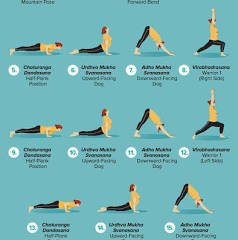
Surya Namaskar, or Sun Salutation, is a yoga sequence dedicated to honoring the sun as the vital energy source for life. Traditionally performed at dawn facing the rising sun, this practice combines 12 postures, controlled breathing, and mantric chants to foster gratitude, flexibility, and strength.
Tummee +4
Key Aspects of Sun Worship in Yoga:
When she told me the story, I didnt grasp how fully entwined Yoga and its poses were till I looked beyond the surface. It is surprising giving that it is seen as just exercise and for health, but here is what I came across..
Surya Namaskar, or Sun Salutation, is a yoga sequence dedicated to honoring the sun as the vital energy source for life. Traditionally performed at dawn facing the rising sun, this practice combines 12 postures, controlled breathing, and mantric chants to foster gratitude, flexibility, and strength.
Tummee +4
Key Aspects of Sun Worship in Yoga:
- Origin: It has deep roots in Hindu tradition, with early evidence in the Rig Veda.
- Significance: The sun is revered as a deity, offering vitality, health, and a spiritual connection to the cosmos.
- The Sequence (Surya Namaskar): It includes 12 postures that flow together, often including Mountain Pose, Forward Fold, Plank, Chaturanga, Cobra, and Downward-Facing Dog.
- Benefits: It serves as a comprehensive warm-up that strengthens the body, improves circulation, and acts as a moving meditation to reduce stress.
YogaRenew +6
- Timing: Ideally, it is practiced in the morning facing the sun, though it can be done at any time, notes Cleveland Clinic Health Essentials.
- Flow: The sequence connects breath with movement—inhaling on expansion and exhaling on contraction.
- Variations: There are different variations, such as Surya Namaskar A and B, which are widely used to build energy